Symptoms
There are similar symptoms for the four different types of active tuberculosis:
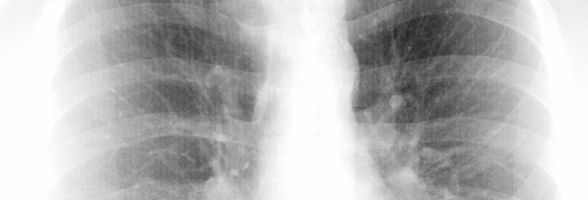
Pulmonary tuberculosis – The initial infection of this type is called primary pulmonary tuberculosis and it affects the lungs. Patients with this have minor symptoms such as a dry cough, fever and some chest X ray abnormalities. Primary pulmonary tuberculosis can disappear by itself, but the active form of the disease does return in 50-60% of cases.
When it does return the signs and symptoms of active pulmonary TB include:
- A cough lasting three or more weeks that may produce a bloody sputum
- Fatigue
- Unintended weight loss
- Night sweats
- Slight fever
- Loss of appetite
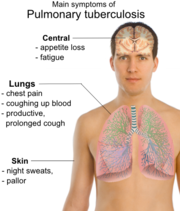
Main Symptoms of Pulmonary Tuberculosis. Image courtesy of en.wikipedia.org/wiki/File:Pulmonary_tuberculosis_symptoms.png. This image is in the public domain and is copyright free.
Tuberculous pleuritis - occurs in people whose lungs have been affected by the active form of pulmonary tuberculosis. In this type the pleural space which is between the lung and the abdominal cavity becomes ruptured by the active TB bacteria multiplying.
These Patients have symptoms consisting of:
- A nonproductive cough
- Fever
- Chest Pain
The disease may disappear and return at a later date.
Miliary Tuberculosis – This is when the active TB bacteria exploits weak immune systems and spreads through the blood to different parts of the body. Mostly common in infants and the elderly.
These patients have symptoms consisting of:
- A Fever
- Weakness
- Loss of appetite
- Weight Loss
- Cough and difficulty breathing are less common.
Dormant Tuberculosis – This is when the TB bacteria that have been walled of by the macrophages returns and becomes active. This usually occurs in the upper lungs.
These patients have symptoms consisting of:
- A common cough with a progressive increase in the production of mucus
- Coughing up blood